

Spiritualität und Alltagsspiritualität - Clara Welten
Erfahre, wie Meditation, Chakrenarbeit und Lichtenergie deinen Alltag transformieren können. Clara Welten teilt alltagstaugliche Spiritualität.
Read more
There are moments in life that feel like an invisible turning point. You sense something calling within you—a gentle but persistent whisper. Perhaps you feel that you are going around in circles, that you are stuck at a deeper level, even though you have been working on awareness, mindfulness, or therapy for a long time. It is precisely in such phases that a shamanic retreat opens the door to ancient, archaic knowledge that lies beyond words.
A shamanic retreat is not an escape from everyday life, but a return to yourself. It is an invitation to let go of your masks, surrender to nature, and entrust yourself to the flow of life. Here, spirituality, healing, and transformation come together at a depth that the mind alone cannot comprehend.
Shamanic retreats are rooted in the wisdom of indigenous cultures, whose worldview is characterized by connectedness. In their eyes, everything has a soul—every stone, every tree, every animal, and every human being. Illness, pain, or inner blockages arise when we lose this connection.
In a shamanic retreat, you are invited to restore this connection. Encountering the elements, the earth beneath your feet, the blazing fire, the breath of the wind, and the cleansing water reminds you that healing is not done, but remembered.
The structure of such retreats is diverse: it can include drum journeys, plant ceremonies, rituals around the fire, breath and energy work, but also periods of silence and walks in nature. The shaman accompanies you with songs, prayers, and symbols that create a bridge between the worlds – between your consciousness and what lies beyond it.
Many people describe their experience as a journey into their own inner selves, into the unconscious, where they encounter old emotions, repressed memories, or unresolved issues. But instead of analyzing them, they are energetically transformed in the shamanic context—through presence, sound, rhythm, and devotion.
Transformation is not a gentle caress, but often a deep breath in the storm. In the shamanic process, what has long been hidden becomes visible. Old wounds, fear, anger, or grief may rise to the surface – not to overwhelm you, but to finally be released.
The shaman opens a sacred space in which you can feel safe. Here you can feel, cry, tremble, laugh, or scream – without judgment, without shame, without a mask. The drum rhythms lead you into trance states in which you sink deeper into your inner self. Perhaps you will see images, feel energies, or hear messages.
At its core, transformation means feeling whole again. The old can go, the new can be born. It is like an inner death and rebirth – a letting go of identities, roles, and beliefs that once gave you security but now hold you captive.
This ancient shamanic wisdom describes what it is really about: consciousness. It is not the external ritual that heals you, but your inner willingness to surrender to the process.
In the Western world, healing is often reduced to the body. But in the shamanic tradition, healing is a holistic process. It happens on several levels at once:
Physically, when you begin to release tension and stored emotions.
Emotionally, when you learn to allow and transform pain, anger, or fear.
Mentally, when you realize that many of your thought patterns are not your own.
Spiritually, when you remember that you are part of the greater whole.
A shamanic retreat is not a short-term “healing event.” It is an initiation. It reminds you of what you already know: that healing resides within you.
Nature acts as a mirror of your soul. When you walk barefoot on the earth, bathe in the river, or watch the fire, you feel that everything is interconnected. Your body is not separate from the earth, your tears are not separate from the rain, your breath is not separate from the wind.
In this deep connection, space is created for real healing—beyond concepts, techniques, and words.
In shamanic work, the elements are not just symbols, but living forces. They remind you of the cycles of life—becoming, passing away, and new beginnings.
Earth—It teaches you to put down roots, to ground yourself, to arrive in your body.
Fire – It burns away the old, purifies, and gives you courage for the next step.
Water – It flows through your emotions, washing away everything that weighs you down.
Air – It brings lightness, clarity, and the breath of life.
These elements are consciously integrated into the retreat – for example, through fire ceremonies, sweat lodges, water cleansing, or breathwork. Each encounter is a reminder that you are part of these forces.
When you engage with the elements, you begin to recognize yourself in them. Your breath is wind, your blood is water, your body is earth, and your inner fire is the life force that drives you.
The ceremony ends – but the real journey begins afterwards.
A shamanic retreat is only the beginning of a long, conscious integration.
The impressions, insights, and inner images need to be translated into everyday life: into your actions, your relationships, your interaction with yourself. You learn to speak with more mindfulness, to breathe more consciously, to feel more honestly.
Many participants report that after a retreat, they realign their lives—some change careers, others end old relationships, and still others find a deeper connection to nature or begin to walk the path of healing themselves.
The true art lies in integration: not losing yourself in old patterns again, but living what you have experienced step by step.
Daily rituals help here—such as burning incense, working with drums, meditation, or conscious time in nature. These small, mindful actions anchor the sacred in everyday life.
In shamanic understanding, healing is inextricably linked to consciousness. It is not about “fixing something,” but about reconnecting with your true self—with the part of you that has never been hurt.
Transformation is not a goal, but a process that leads you deeper and deeper into the present moment. Every crisis, every tear, every moment of pain can become a gateway if you are willing to walk through it.
During or after a shamanic retreat, many people experience moments of enlightenment in which they realize that everything they were looking for outside themselves has long been within them. The fire, the drum, the plants, the songs—they are all mirrors of your own inner power.
This realization leads to a new way of life—less characterized by fear, control, and separation, and more by trust, devotion, and connectedness.
It is not uncommon for a shamanic retreat to trigger a profound change in one's life.
Some discover their calling—beginning to accompany others on their journey, training in healing methods, or founding spiritual communities.
This experience is more than a journey—it is an initiation.
It can show you who you are, why you are here, and that you already have everything you need within you.
In a world that is becoming faster, louder, and more rational, the shamanic retreat is a space that reminds you of what really matters: presence. Love. Connection.
In a shamanic retreat, rituals, drum journeys, energy work, and plant medicine guide you into a state where deep healing and consciousness work become possible. The shamans create a protected, sacred space where you can release old energies, receive new insights, and reconnect with nature and your soul.
The effect of such a retreat is very individual. Many people report a deep inner clarity, emotional liberation, and a new sense of connectedness. Old issues can be resolved, while body, mind, and soul come back into harmony. Often, the actual transformation only becomes apparent weeks or months after the retreat—in the form of greater serenity, inner strength, and awareness of what is essential.
Yes, even people with no previous experience can participate in a shamanic retreat. The most important thing is to be open to the process and to trust the guidance you receive. Good shamans or retreat leaders will make sure that you feel safe and can respect your own rhythm.
Preparation begins internally: through mindfulness, conscious nutrition, meditation, or journaling. Avoid excessive media use, alcohol, and heavy food in the days leading up to the retreat to clear your energy system. Formulate a clear intention—for example, “I am ready to let go of what no longer serves me.” This inner alignment helps to deepen the process.
A retreat can be a wonderful complement to psychotherapy, but it cannot replace it. While therapy often works on a mental or emotional level, a shamanic retreat opens up an energetic-spiritual healing space. It can initiate processes that expand your consciousness and connect you to your life energy on a deeper level.
Erfahre, wie Meditation, Chakrenarbeit und Lichtenergie deinen Alltag transformieren können. Clara Welten teilt alltagstaugliche Spiritualität.

Ayahuasca Retreat – Effects, Ceremonies & Legal Issues. Find out where retreats are legal and how to find a safe spiritual experience.
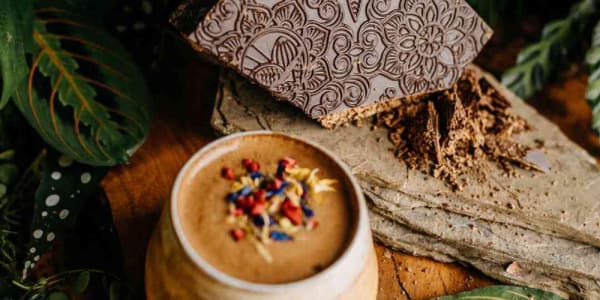
Rituals such as drinking cocoa make your life more meaningful. They transform everyday moments into conscious encounters with yourself.