
Die Seele kann sich öffnen in deinem Amnanda Jahr - Stephanie Weppler
In deinem Amnanda Jahr darf sich die Seele öffnen. Ayurveda-Therapeutin Stephanie Weppler führt dich achtsam zu mehr Selbstliebe und Frieden.
Read more
Some inner experiences cannot be planned. They happen in moments of deep silence—perhaps during a breathing meditation, in the vastness of nature or in the midst of everyday life, when something old falls away from us. A slight tingling sensation along the spine. A feeling of inner expansiveness. Or a deep, unfamiliar clarity. Many people describe such moments without immediately having words for them.
In spiritual traditions, this inner power has been described for thousands of years: as kundalini energy, as a sleeping serpent resting at the base of the spine. Its awakening is not considered a goal, but rather a natural process of inner awakening—when the body, mind and heart are ready.
This topic is becoming increasingly common, especially in retreats, yoga training courses and mindful time-outs. Not as an exotic promise, but as an invitation to listen more deeply: What is really moving within me? What energy wants to be lived? This article invites you to understand Kundalini energy mindfully, grounded and in the context of modern spiritual practice.
The image of the sleeping snake is a metaphor for potential, vigilance and transformative power.
Contrary to popular belief, Kundalini is not about spectacular experiences or spiritual shortcuts. Rather, it describes an inner maturation process in which consciousness rises layer by layer through the energy centers—the chakras. Each stage brings its own themes: security, creativity, self-esteem, love, expression, intuition and connectedness.
For retreat leaders and coaches, this understanding is key: Kundalini energy is not an event, but a path. A path that requires grounding, integrity and guidance.

In many cultures, the snake is a symbol of renewal and wisdom. It sheds its skin, renews itself and remains in close contact with the earth. In Kundalini teachings, it embodies the unconscious potential that exists within every human being.
The fact that this energy is “dormant” does not mean that it is inactive. It works subtly—in our intuition, our vitality, our ability to self-regulate. Only when inner blockages are released and awareness grows does it begin to manifest itself more consciously.
Spiritual practice here does not mean “awakening at any cost,” but rather creating space. Space through mindfulness, honest self-exploration and living in harmony with one's own values. Many retreats start right here: they offer safe spaces where inner processes can take place without being forced.
A Kundalini awakening is often associated with intense experiences: heat, emotional waves, altered perception. But in practice, many people experience a quiet, integrative process. Greater presence. Deeper compassion. Clearer decisions.
It is important to distinguish between natural awakening and excessive demands. If energy work is done without grounding, insecurity, sleep disorders or emotional instability can occur. That is why experienced teachers emphasize the importance of body awareness, breath work and suitability for everyday life.

The chakras form the map through which Kundalini energy moves. Each chakra represents specific life themes – from basic trust to transcendence. Blockages often manifest themselves not spiritually, but in very concrete ways: in relationships, at work, in the body.
A conscious Kundalini process integrates these levels. Grounding in the root chakra can mean creating financial stability. Opening up in the heart chakra manifests itself in authentic connection. The crown chakra, in turn, invites devotion—not escapism.
For spiritual offerings, this means holism. Yoga, meditation, coaching and nature experiences intertwine. RetreatPartner positions itself here as a platform for precisely these conscious spaces.
Kundalini energy does not belong only on the meditation mat. It has an effect in everyday life—in the way we listen, set boundaries and make decisions. Retreats offer a concentrated space to consciously perceive and integrate this energy.
Conscious breaks help to regulate the nervous system and process inner processes. Self-care is essential, especially for yoga teachers, coaches and seminar leaders. Kundalini work always begins with your own embodiment.
Kundalini energy describes the original life force and consciousness inherent in every human being. It is not a foreign or “magical” phenomenon, but a natural aspect of our humanity. In spiritual traditions, it is described as dormant energy at the base of the spine—symbolically represented as a sleeping snake.
In everyday life, this energy often manifests itself in unspectacular ways: as intuition, vitality, inner clarity or the desire for meaning and development. When we live more consciously, treat our bodies with care, and allow inner processes to unfold, this energy can become increasingly noticeable. Kundalini is therefore less something that one “does” and more something that one allows space for.
There are techniques from yoga, breathing exercises and meditation that can stimulate the flow of energy in the body. However, deliberately forcing a kundalini awakening is not recommended from today's perspective. Consciousness develops organically—at its own pace.
Many experienced teachers emphasize that a genuine kundalini awakening is more the result of inner maturity, stability and openness than of intensive exercises. If energy is released too quickly without the body and psyche being prepared, it can be overwhelming. Sustainable spiritual development is based on mindfulness, patience and good guidance.
Kundalini energy itself is not dangerous. It can become challenging when powerful inner processes take place without grounding, integration or support. Some people then experience emotional fluctuations, sleep problems or a feeling of being overwhelmed.
That is why it is important not to view Kundalini in isolation, but in connection with the nervous system, the body and everyday life. Grounding practices such as exercise, conscious nutrition, contact with nature and social stability are essential. Retreats or guided seminars can provide a safe environment in which experiences can be classified and integrated.
Retreats offer a safe space where inner processes can unfold – far away from pressure to perform, distractions and everyday demands. Silence, nature, conscious rituals and mindful practice support the nervous system and create trust in one's own inner process.
Experienced guidance is particularly valuable when it comes to sensitive topics such as kundalini energy. Retreats make it possible to share experiences, ask questions and place what you have experienced in a larger context. They are not places of “rapid awakening,” but spaces for lasting integration.
No. Kundalini energy is not linked to previous spiritual experience. Many people experience inner openings or changes in consciousness quite independently of formal practice – for example, through life crises, experiences of nature or conscious time-outs.
What is helpful are qualities such as openness, personal responsibility and a willingness to be honest with oneself. Regular, gentle practice can be supportive, but it is not a prerequisite. It is important to respect your own path and not compare yourself to others.
In most cases, active Kundalini energy manifests itself subtly and in ways that are compatible with everyday life. People report greater presence, deeper body awareness, emotional clarity or changed priorities in life. Relationships become more honest, decisions more coherent.
Strong physical sensations or visionary experiences are possible, but by no means necessary or desirable. An essential sign is often a growing sense of connectedness—with oneself, with others and with life as a whole.
Yes, and that is precisely what is crucial. Kundalini energy does not unfold its qualities in exceptional circumstances, but in everyday life. Conscious breathing, mindful movement, time spent in nature and regular self-reflection help to stabilize inner processes.
Clear structures, healthy boundaries and treating yourself with love are also part of this integration. Spiritual growth ultimately shows up in how we live, listen, work and love—not in how intense our experiences are.
In deinem Amnanda Jahr darf sich die Seele öffnen. Ayurveda-Therapeutin Stephanie Weppler führt dich achtsam zu mehr Selbstliebe und Frieden.
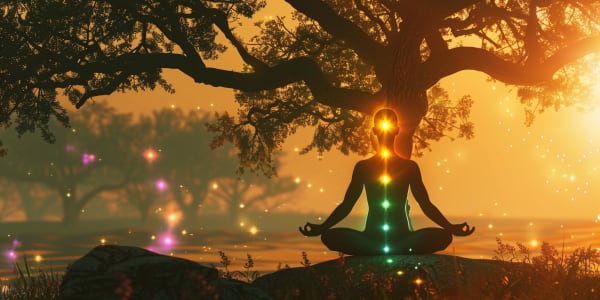
Immerse yourself in the world of chakras: understand their meaning, harmonize your energy flow, and find inner clarity and strength.

Welcome to the world of yoga festivals – mindful events and places where community, healing and joy of life come together.