
Yoga Festivals 2026 - Your event calendar for mindful togetherness
Welcome to the world of yoga festivals – mindful events and places where community, healing and joy of life come together.
Read more

In our fast-paced world, it can be difficult to find a moment of true silence. A Kundalini Yoga retreat offers a physical and mental space where you can step back from your daily responsibilities. It is not about perfect poses or athletic performance. Instead, it is about experiencing yourself more clearly. During these days, you focus on your breath, your body, and the quietness that exists beneath the noise of a busy life. It is an invitation to slow down and listen to what your body really needs.
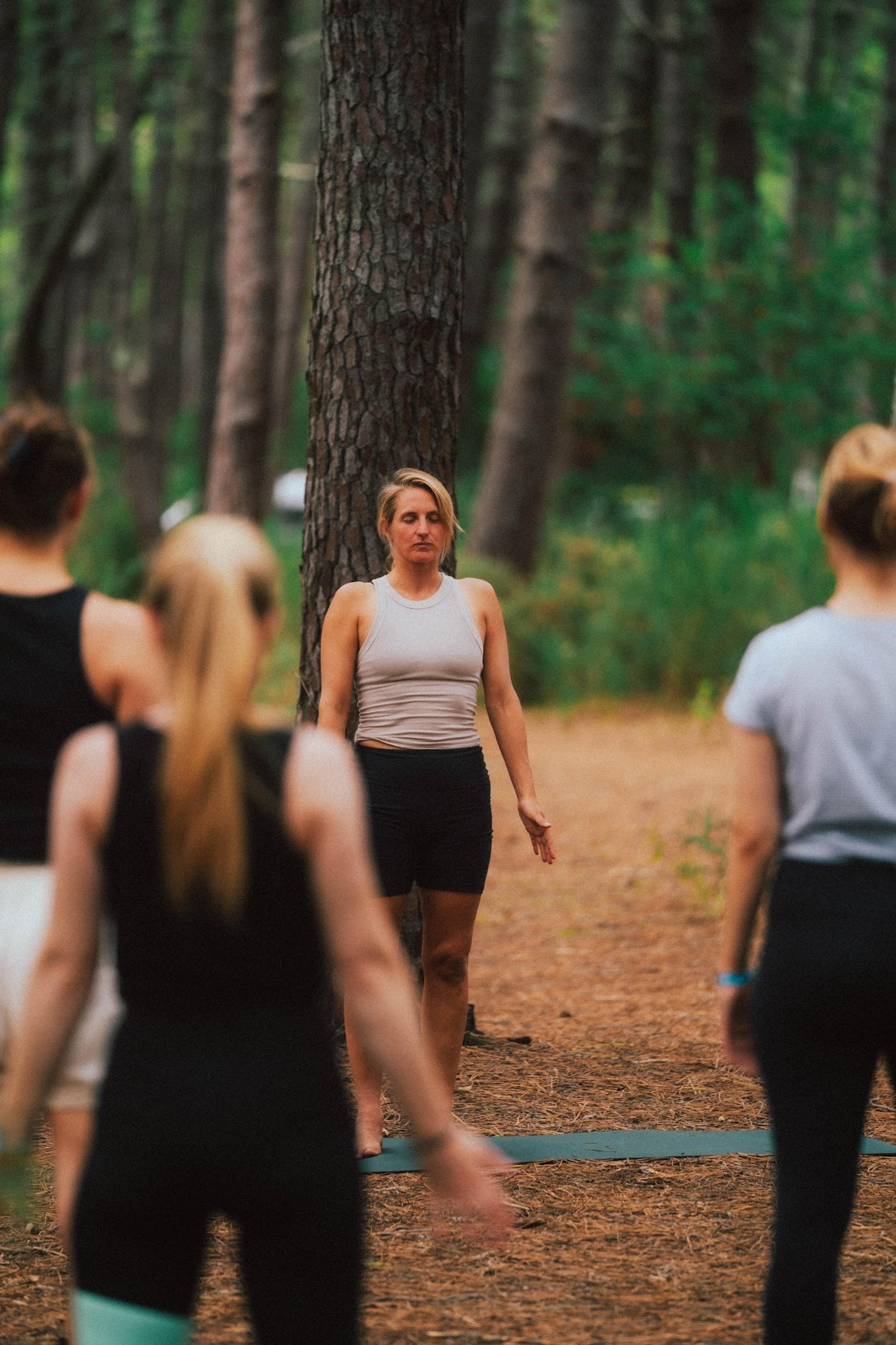
At the heart of the experience are the 'Kriyas'. These are specific sequences of postures and movements designed to achieve a particular effect, such as improving digestion, strengthening the nervous system, or clearing a heavy mind. Each movement is performed with awareness. You might find that some exercises are dynamic, while others invite stillness. The goal is always the same: to help you feel more grounded and present in your own skin. You will learn to recognize your boundaries and respect them, moving at a pace that feels right for you.
Breath is our most fundamental tool for self-regulation. In a retreat setting, you will have the time to explore different breathing techniques, often called Pranayama. These practices help to calm the nervous system and can be a powerful tool for managing stress or anxiety long after the retreat has ended. By focusing on your breath, you create a bridge between your mind and your body. It is a simple yet profound way to regain focus and energy when you feel overwhelmed by external demands.
Attending a regular weekly class is beneficial, but staying at a retreat for several days allows for a much deeper level of reflection. When you are at home, there are always chores to do or messages to answer. At a retreat, these distractions are removed. This environment provides the safety and structure needed to look inward without the usual interruptions. It is an investment in your long-term health and mental clarity.
Breaking your habitual patterns is one of the most effective ways to gain a new perspective. When you change your physical environment, your mind often follows. You eat differently, sleep at different times, and spend your hours focused on your well-being. This shift helps you identify which parts of your daily routine are serving you and which parts might be contributing to your exhaustion. It is a chance to hit the reset button in a gentle, supportive way.

Living in a constant state of ‘doing’ can leave us feeling disconnected. A Kundalini Yoga retreat provides a structured yet flexible environment to transition back into a state of ‘being’. Here, the focus is on simplicity and presence. Whether you are a complete beginner or have practiced for years, the retreat environment allows you to meet yourself exactly where you are today.
You will find that the atmosphere is one of mutual respect and quiet support. There is no pressure to perform. The teachers provide guidance and tools, but the journey is uniquely yours. Many participants find that the most profound moments happen during the quiet intervals between sessions—walking through nature, sitting with a book, or simply enjoying a meal in silence. This balance of structured practice and personal time is what makes a retreat so restorative for the mind and the nervous system. By taking this time for yourself, you are not being selfish; you are replenishing your resources so that you can return to your life with more patience, clarity, and kindness toward yourself and others.
Every retreat is different, but most follow a natural rhythm that aligns with the body’s energy levels throughout the day. Usually, the day begins early, often with the rising sun, to take advantage of the quiet morning hours. This early start allows you to experience the world before it becomes noisy. After the morning practice, there is usually a communal breakfast where you can enjoy nourishing food in a calm setting. The middle of the day is often reserved for rest, nature walks, or workshops that delve deeper into specific topics related to health and mindfulness.
Many retreats incorporate sound as a way to facilitate deep relaxation. This might involve the use of gongs, singing bowls, or simple meditative chants. Sound has a way of helping the brain enter a state of deep rest that is sometimes difficult to reach through silent meditation alone. These sessions often take place in the late afternoon or evening, helping you prepare for a peaceful night's sleep. It is a time to let go of any tension you may have been holding in your muscles or your thoughts.
While much of the work in a retreat is personal, there is a beautiful sense of community that often develops. You are surrounded by people who, like you, have chosen to prioritize their well-being. Sharing a meal or a conversation with someone who understands the value of mindfulness can be very validating. These connections are often low-pressure and honest, providing a sense of belonging that supports the individual journey you are on.
The impact of a Kundalini Yoga retreat often reveals itself in the weeks and months after you return home. Because you have had the time to truly settle into your body, the lessons learned become more than just intellectual ideas—they become felt experiences. You might find that you react more calmly to a stressful situation at work, or that you have more energy for your family because you have rested deeply at a cellular level.
In our society, there is often a push to go faster and do more. A retreat teaches you the value of your own natural rhythm. You learn to recognize when you need more movement and when you need more stillness. This self-awareness is a vital skill for preventing burnout. By practicing this for several days in a row, you build a 'muscle memory' of what it feels like to be balanced, making it easier to find your way back to that state when life becomes hectic again.
Preparing for a retreat doesn't have to be complicated. The more you can simplify your arrival, the easier it will be to settle in. It is helpful to start slowing down a few days before you leave. Perhaps reduce your caffeine intake or spend a little less time on your phone. This makes the transition into the retreat environment smoother and less of a shock to your system.
Consider what kind of environment helps you feel most at peace. Do you feel more grounded near the ocean, or do you prefer the stillness of the mountains? The location of the retreat plays a significant role in your experience. Choose a place that feels inviting and safe to you. The physical space should feel like a sanctuary where you can truly let your guard down and focus on your inner journey without worrying about the outside world.
Keep your packing list simple and practical. Comfortable, layered clothing is essential, as your body temperature may change during different types of practice. Natural fabrics like cotton or linen are often the most comfortable for yoga. You might also want to bring a journal to write down your reflections, a water bottle, and any personal items that help you feel at home. Most retreats provide the necessary equipment like mats and cushions, but you can always check with the organizers beforehand to be sure.
The real 'work' of a retreat begins when you leave. Carrying the sense of peace you found back into your daily environment requires intention. It is helpful to choose one or two small practices—perhaps a five-minute breathing exercise or a specific stretch—to keep the connection to your retreat experience alive. You don't need to change your entire life overnight; small, consistent steps are often the most sustainable way to maintain your well-being.
No, most retreats are open to all levels, including complete beginners. The instructions are usually clear and allow you to practice at your own comfort level.
Kundalini Yoga focuses heavily on the connection between movement, breath, and sound (mantra). It is less about achieving perfect physical alignment and more about managing your internal energy and nervous system.
Comfort is key. Many people choose to wear white or light-colored clothing as it is traditional in Kundalini Yoga, but any comfortable, loose-fitting clothing that allows you to move freely is perfectly fine.
While the schedule is designed to support your journey, most retreats respect your personal boundaries. If you feel you need extra rest or time alone, you are usually encouraged to listen to your body.
Yes, retreats are excellent for stress relief. They provide a physical break from triggers and offer tools like breathwork and meditation that help regulate the nervous system and lower cortisol levels.
Most retreats serve healthy, vegetarian or vegan meals designed to support detoxification and provide stable energy throughout the day.
Welcome to the world of yoga festivals – mindful events and places where community, healing and joy of life come together.

Welcome to the world of spiritual festivals - places where community, healing, awareness, and joy of life come together.