What is Abhyanga Massage?
Abhyanga is one of the most well-known and essential treatments in the world of Ayurveda. It is a full-body massage performed with generous amounts of warm, herb-infused oils. In a world that often feels fast-paced and fragmented, Abhyanga offers a way to feel whole again. It is not just a physical treatment for the muscles; it is a ritual designed to harmonize the body's energies and provide a sense of deep grounding.
The Meaning of Loving Hands
In Sanskrit, the word 'Abhyanga' is often associated with the concept of 'Snehana,' which translates to both 'oleation' and 'love.' This dual meaning is significant. When you receive an Abhyanga massage during an Ayurveda retreat, you are not just being touched mechanically. The rhythmic, synchronized strokes are intended to mimic a sense of care and protection. This gentle approach helps the body feel safe enough to release deep-seated tension. For many, this feeling of being 'held' is the first step toward true recovery from stress.
The Role of Medicated Oils
Unlike Western massages that might use simple mineral oils or lotions, Abhyanga relies heavily on specialized Ayurvedic oils. These are often sesame-based and have been cooked with various herbs for hours to ensure the healing properties are deeply integrated. During an Ayurveda retreat, a practitioner will choose an oil specifically for your constitution, or 'Dosha.' For example, if you are feeling restless or cold (Vata), a warming and grounding oil is used. If you are experiencing inflammation or heat (Pitta), cooling herbs are incorporated. This personalized approach ensures that the massage works on more than just the surface level.
The Benefits of Regular Oil Massage
The traditional texts of Ayurveda suggest that practicing Abhyanga daily can lead to longevity, better sleep, and vibrant skin. While a single session is deeply relaxing, the cumulative effects of receiving these massages during a multi-day retreat are profound. It is a practice of preventative health that treats the body as an integrated system rather than a collection of parts.
Physical Detoxification and Circulation
The long, flowing strokes used in Abhyanga follow the direction of the circulatory and lymphatic systems. By moving the oil towards the heart and focusing on specific energy points known as 'Marma points,' the massage helps stimulate the flow of lymph. This assists the body in moving toxins (Ama) out of the tissues and toward the digestive tract for elimination. Increased circulation also means that fresh oxygen and nutrients reach the cells more efficiently, leaving you feeling revitalized and lighter.
Nervous System Regulation
Perhaps the most immediate benefit of Abhyanga is its effect on the nervous system. The skin is the largest organ of the body and is deeply connected to the brain through countless nerve endings. The warmth and consistent pressure of the oil help to soothe the nervous system, shifting the body from a 'fight or flight' state into 'rest and digest.' This is why many people find that their digestion improves and their sleep becomes much deeper after a session. It is an effective way to manage the chronic 'noise' of modern life.
What to Expect During Your Treatment
If you are new to Ayurveda, your first Abhyanga session might feel quite different from a typical spa massage. It is helpful to enter the room with an open mind and a willingness to surrender to the process. The focus here is not on 'working out knots' with deep tissue pressure, but on encompassing the whole body in a continuous, flowing rhythm.
Preparation and Environment
The treatment room at an Ayurveda retreat is usually kept very warm. This is intentional, as it helps the pores stay open and prevents you from feeling a chill while the oil is applied. You will typically be asked to undress, though disposable undergarments are often provided. Minimal draping is used compared to Western massages because the goal is to keep the oil flowing across the entire body in long, uninterrupted strokes. The atmosphere is quiet, often with subtle scents of herbs and incense, designed to promote a meditative state.
The Sequence of the Stroke
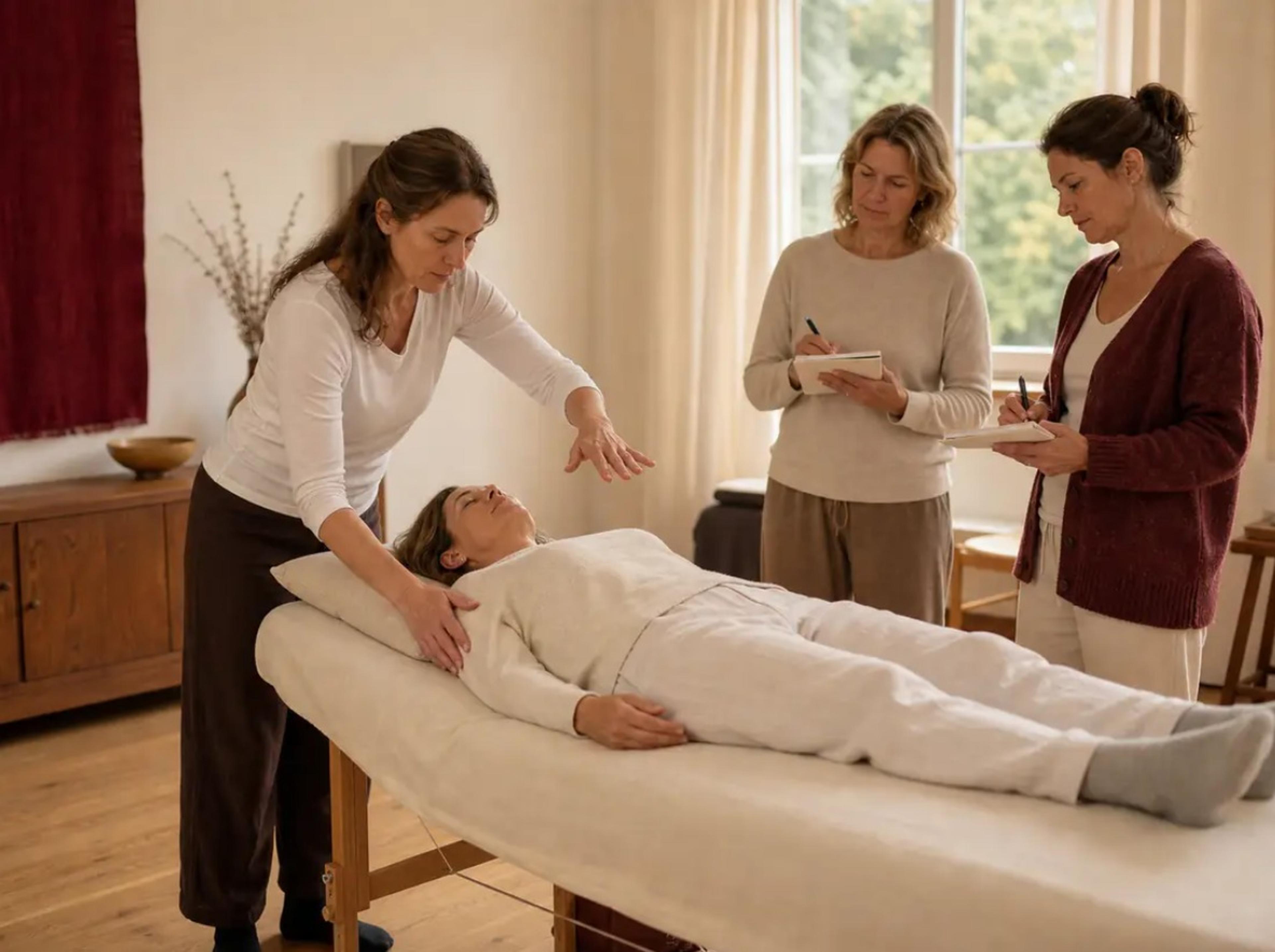
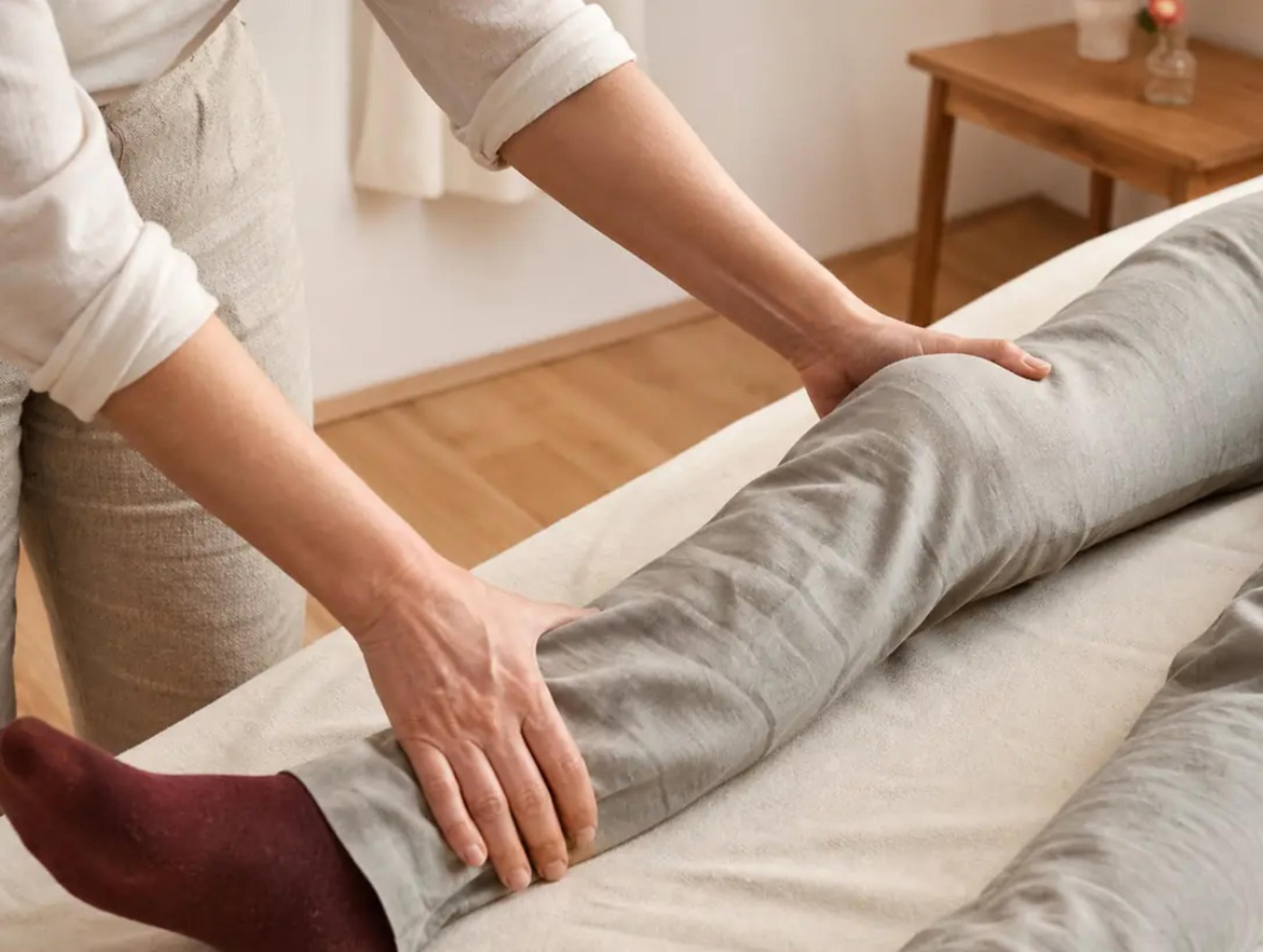
The therapist usually begins with the head and ears before moving down the body. They use specific movements: long strokes on the limbs and circular motions over the joints and the abdomen. There is a specific logic to this sequence that encourages the movement of energy (Prana) in the correct direction. In some retreats, two therapists may work on you simultaneously in a synchronized 'four-hand' massage. This creates a balanced experience where the left and right sides of the brain can relax equally, leading to a state of profound stillness.
Self-Abhyanga: Bringing the Practice Home
While receiving Abhyanga from a professional is a luxury of the retreat experience, one of the greatest gifts of Ayurveda is that it teaches you how to care for yourself. Self-Abhyanga, or 'Snehana,' is a practice you can integrate into your morning routine once you return home. It serves as a reminder of the peace you found during your retreat.
The Art of Warming the Oil
The first step in a successful home practice is using warm oil. You can place a small bottle of organic sesame or almond oil in a bowl of hot water for a few minutes. Applying cold oil can be a shock to the nervous system, whereas warm oil is immediately soothing. This simple act of preparation creates a transition between your sleep and your active day, allowing you to start your morning with a moment of self-care instead of rushing straight into tasks.
Daily Routine Integration
You don't need an hour to reap the benefits of self-massage. Even ten to fifteen minutes before your morning shower can make a significant difference. Focus on your scalp, the soles of your feet, and your hands—areas that contain many nerve endings. By massaging yourself, you become more attuned to your body's needs. You might notice areas of tension before they become painful, or you might find that the oil helps protect your skin from the drying effects of weather and indoor heating. It is a sustainable way to maintain the 'retreat feeling' in everyday life.
Why Choose a Retreat for Your First Abhyanga
While you can find Ayurvedic massages in many city spas, a dedicated retreat offers a level of immersion that is hard to match. At a retreat, the diet, the yoga sessions, and the environment all support the work being done on the massage table. It is a space where you can truly unplug and focus on your well-being without the pressure of an immediate 'return to reality.'
Sustainable Stress Management
A retreat gives you the time to observe how your body responds to the treatments. You might notice that by day three, your digestion is better, or that the persistent ache in your shoulders has finally eased. These observations are valuable; they teach you what it feels like to be in balance. This awareness is a powerful tool for managing stress once you are back in your usual environment. You learn that relaxation is not just a luxury, but a necessary component of a healthy life.
Deepening the Mind-Body Connection
The quietude of a retreat allows the physical benefits of Abhyanga to reach the mind. As the body relaxes, the mind often follows. You may find that long-forgotten memories surface or that solutions to problems appear effortlessly. This is the beauty of the Ayurvedic approach: by treating the body with oil and touch, we are also nourishing the spirit. It is a holistic experience that reminds you of your inherent resilience and capacity for peace. Choosing a retreat is an investment in your long-term health and a step toward a more grounded way of living.