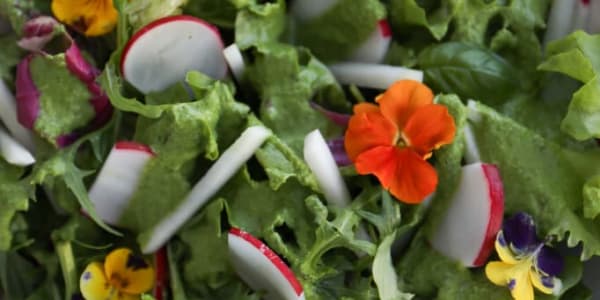
Recipe from Apricus - Spring salad with green smoothie
Discover the Apricus Spring Salad with Green Smoothie—a colorful, healthy recipe full of vitamins, freshness, and springtime joy.
Read more
Ayurveda is much more than just a dietary trend. This Indian healing art, which is over 5.000 years old, views humans as a unique interplay of body, mind and energy. This is precisely where Ayurvedic nutrition comes in: it is not based on calories or diets, but on your individual dosha type.
With our new Ayurveda nutrition app from RetreatPartner, this knowledge is now easy to understand, suitable for everyday use and practical to implement—including a dosha test, personalized 7-day nutrition plan, matching recipes and automatic shopping list as a PDF.
Ayurvedic nutrition is based on the idea that every person has an individual energetic constitution from birth. This is made up of the three doshas:
Vata (air & space)
Pitta (fire & water)
Kapha (earth & water)
The aim of nutrition is to keep these doshas in balance. If a dosha becomes unbalanced, it can lead to restlessness, digestive problems, exhaustion or weight gain.

Vata people are often slim, creative, mentally very active and sensitive.
Imbalance:
Nervousness, feeling cold, flatulence, sleep problems
Nutrition for Vata:
warm
soft
well seasoned
regular
Eating schedule:
3 fixed meals a day, no long breaks
Pitta types have a strong metabolism, clear thinking and a lot of assertiveness.
Imbalance:
Irritability, heat, inflammation, heartburn
Nutrition for Pitta:
cooling
light
bitter & sweet
slightly spicy
Eating schedule:
3–4 meals, largest meal at lunchtime

Kapha people are grounded, strong, persistent and emotionally stable.
Out of balance:
Sluggishness, weight gain, mucus formation
Nutrition for Kapha:
light
warm
spicy
rather dry
Eating schedule:
2–3 light meals, few snacks
Ayurveda is effective – but often complex. Many people fail to correctly apply this knowledge to their everyday lives.
This is exactly where the Ayurveda nutrition app from RetreatPartner comes in:
✔ Easy-to-understand dosha test
✔ Clear explanations instead of technical jargon
✔ Personalized weekly plans
✔ Flexible recipes to swipe through
✔ Automatic shopping lists
✔ PDFs to save or print
The app starts with a scientifically based, Ayurvedic-inspired dosha test. Among other things, it asks:
Body type & energy levels
Digestion & hunger
Sleep patterns
Emotional tendencies
Sensitivity to heat/cold
No mandatory fields:
The more information you provide, the more accurate the result will be – without any obligation.
Based on your dosha type, the app automatically creates a personalized 7-day nutrition plan.
Number of people (1–4 people)
Vegan/vegetarian
Gluten-free/lactose-free
Individual intolerances
Vata: warm & nourishing
Pitta: cooling & balancing
Kapha: light & energizing
Every day and every meal contains interchangeable recipes that you can switch between with a swipe – similar to a retreat nutrition plan.
Each recipe contains:
Ingredients (automatically scaled)
Preparation
Dosha explanation (“Why this dish is good for you”)
This allows Ayurveda to remain flexible, intuitive and suitable for everyday use.
At the end of the week, the app automatically creates:
Sorted by food group
Perfectly tailored to your weekly schedule
clear
easy to print
ideal for retreats, seminars or at home
For people who want to understand Ayurveda
For yoga and retreat participants
For seminar leaders and coaches
For health-conscious families
For anyone who wants nutrition to be individualized rather than dogmatic
This app combines ancient knowledge with modern technology. It makes Ayurvedic nutrition:
comprehensible
personalized
flexible
practical
and supports you in eating in harmony with your dosha – not against yourself.
Ayurvedic nutrition is a holistic nutritional system based on the Indian healing art of Ayurveda. It is based on a person's individual constitution – the so-called doshas (Vata, Pitta, Kapha) – and aims to keep the body, mind and digestion in balance.
In Ayurveda, a dosha describes a person's basic energetic constitution. The three doshas, vata, pitta and kapha, are composed of the elements air, fire, water and earth and influence digestion, metabolism, emotions and energy levels.
The dosha type is determined using an Ayurvedic dosha test. This involves asking questions about physical, mental and emotional characteristics. A digital dosha test, such as the one in the RetreatPartner Ayurveda nutrition app, enables a quick and easy-to-understand evaluation.
An Ayurvedic dosha test provides excellent guidance on your personal constitution. The more questions you answer, the more accurate the result will be. The app deliberately allows incomplete information to be entered in order to make it easy to get started.
An Ayurvedic diet plan takes into account your individual dosha type and combines suitable foods, preparation methods and meal times. The aim is to achieve good digestion (agni), more energy and long-term well-being.
A personalized Ayurvedic nutrition plan avoids blanket diets. Instead, nutrition is specifically tailored to your own metabolism, digestive fire and possible dosha imbalances.
The recommended number of meals depends on your dosha:
Vata: usually 3 regular meals
Pitta: 3 to 4 meals, with the largest meal at lunchtime
Kapha: 2 to 3 light meals
The app automatically takes these differences into account.
Yes. Ayurvedic nutrition can be implemented as vegetarian or vegan. The app allows you to select the appropriate diet and automatically adjusts recipes and ingredients accordingly.
The app is free to use and serves to impart knowledge and inspiration about Ayurvedic nutrition and dosha balance.
No. The app does not replace personal Ayurvedic consultation or medical treatment, but it does offer sound, practical guidance for a dosha-appropriate diet.
Discover the Apricus Spring Salad with Green Smoothie—a colorful, healthy recipe full of vitamins, freshness, and springtime joy.
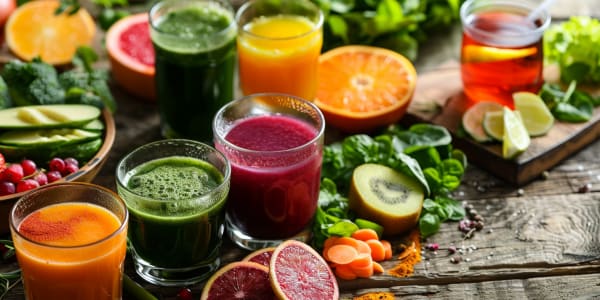
This fasting app creates personalized fasting plans with recipes, daily structure and carefully coordinated exercises – suitable for everyday use and mindful.