
Spiritualität und Alltagsspiritualität - Clara Welten
Erfahre, wie Meditation, Chakrenarbeit und Lichtenergie deinen Alltag transformieren können. Clara Welten teilt alltagstaugliche Spiritualität.
Read more
Many people today feel the call for a simpler, more conscious life. An ashram is such a place—a community where you can encounter yourself, beyond performance and noise.
Whether for a week or for years, ashram life leads to the essence of being—breathing, serving, awakening.
The word ashram comes from the Sanskrit –āśrama – and literally means “place of practice” or “place of endeavor.” Traditionally, the ashram was a retreat in nature where students lived under the guidance of a guru to practice meditation, yoga, study and selfless service (seva). In the 20th century, Bhagwan Shree Rajneesh (Osho) gave the term a whole new dimension. He founded an ashram in Pune, India, that turned the world of spirituality upside down: not a place of asceticism, but a space of living awareness. His disciples—the Neo-Sannyasins—understood “enlightenment” not as withdrawal, but as a deep affirmation of life. In his ashram, people meditated, laughed, cried, danced, loved—everything was allowed. “An ashram is not a monastery, but a place where you learn to be free.” —Osho
From there, the movement spread worldwide—including to Germany. Centers such as the Osho Uta Institute in Cologne and communities in Bavaria and northern Germany emerged from this vision of freer, more conscious coexistence.

Whether traditional or neo-sannyasic, an ashram is a field of energy and consciousness. Here, every breath becomes practice. Cooking, cleaning or listening become meditation. It has been scientifically proven that regular meditation and community living reduce stress, regulate heart rate and the immune system and strengthen emotional resilience. From a spiritual perspective, the ashram opens up space for a deeper experience of the self – beyond roles, expectations and performance. Osho brought movement to stillness: his dynamic meditations, combined with breathing, dance and cathartic elements, made consciousness tangible in the body. “Enlightenment is not a goal – it happens when you stop being someone.” – Osho. Not everyone could handle this radical openness. Some felt that the mixture of therapy and spirituality was pushing boundaries. But that was precisely where its power lay: Osho opened the West to a spirituality that unites emotion, body and consciousness.
Everyday life in an ashram follows a clear, calm rhythm: meditation in the morning, communal meals, work in the garden, yoga, silence. What appears so peaceful from the outside is often an intense process of awareness on the inside—because living in a community confronts us with everything that is still unconscious within us.
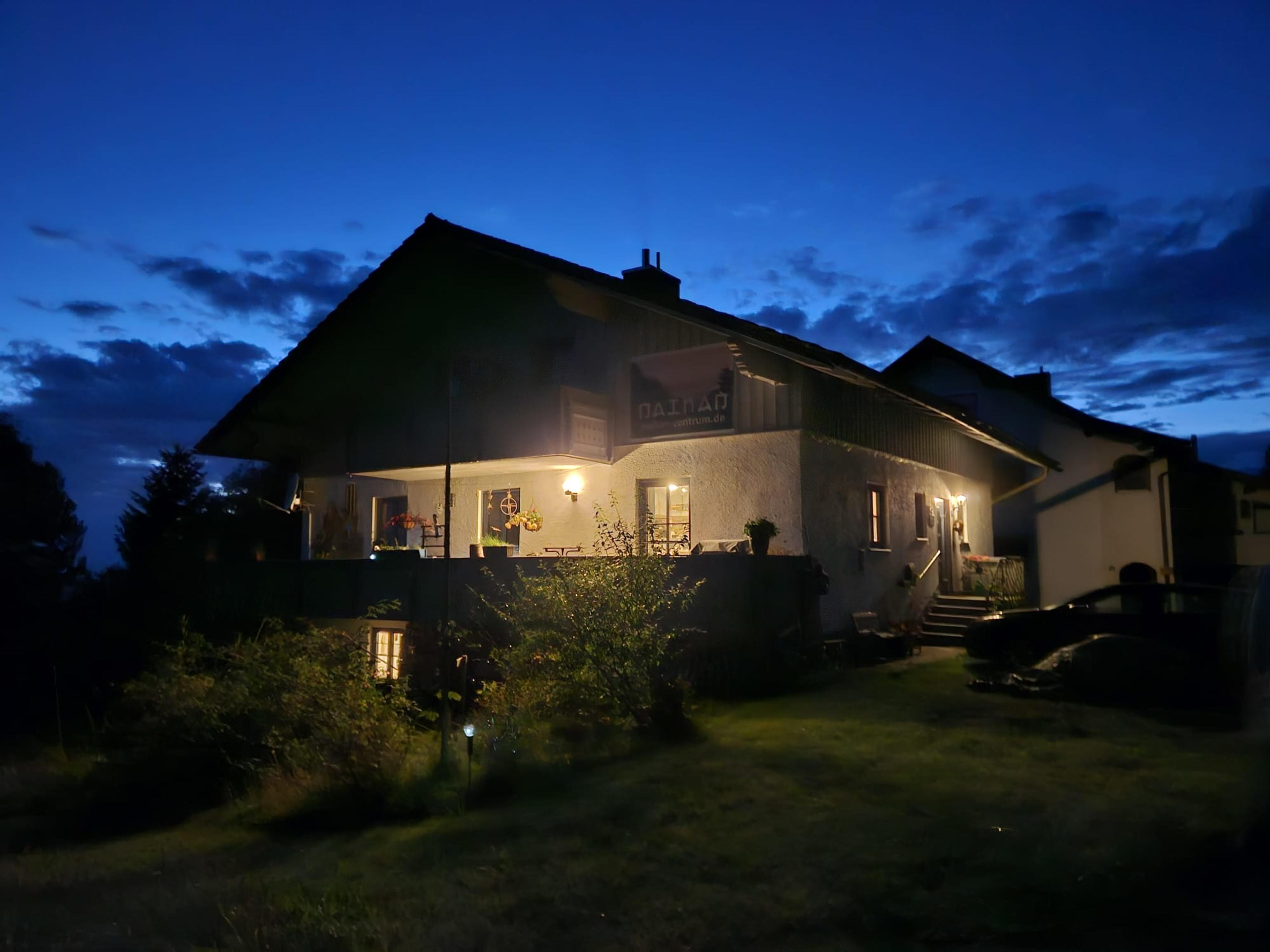
I myself live in a former Sannyasin ashram, which was founded in the 1970s and was eventually dissolved after much internal and external tension. At that time, there was a spirit of optimism: people from all over Europe came together to live in awareness and love. But over time, it became clear that not everyone is cut out for life in an ashram.
Community requires more than idealism. It requires putting your ego aside, taking responsibility and at the same time accepting that some can contribute more and some less. True ashram culture means holding all of this—the strong and the vulnerable, the loud and the quiet.
Perhaps that is the greatest spiritual exercise: to be at peace with the diversity of human existence.
Despite all the challenges, one essential thing remained: the awareness that genuine community is possible when people are willing to encounter one another—beyond control, expectations and power games.
I long for simplicity and meaning.
I am good at living in community.
I am willing to face my emotions honestly.
I want structure, but not dogma.
I want to serve consciously—without expecting anything in return.
Evaluation: 3–5 × “Yes” = Ashram experience could give you deep insights. 1–2 × “Yes” = A retreat as a starting point can be helpful. 0 × “Yes” = Perhaps you are looking for other forms of spiritual growth—everything has its time.

After days or weeks in the ashram, a quiet transformation often takes place. Not because someone is teaching you, but because you see yourself more clearly. You learn to be in the moment without constantly “becoming something.”
Many visitors report that after returning home, they live more consciously, eat healthier, consume less and love more deeply. Some begin to share spiritual paths professionally—as yoga teachers, coaches or retreat leaders.
Der Ashram wird dann nicht mehr als Ort verstanden, sondern als innere Haltung. Ein Zuhause, das man überall mit hinnehmen kann.
Perhaps the ashram calls to us because we long for remembrance—not escape. It shows that spirituality is not detached, but deeply rooted in life.
„The journey doesn't take you away—it brings you home.“
Yes, it is possible to live permanently in an ashram in Germany, but this often involves certain obligations: Many ashrams offer long-term stays as a kind of “second home,” where you are rewarded for room and board (often including meals) by helping out in the ashram (e.g., in the kitchen or with cleaning). There are various models, from permanent residence to longer-term stays of several months, and there are often strict rules regarding diet, drugs and alcohol.
No, you don't necessarily have to belong to a particular religion to live in an ashram; ashrams are often open to people from all backgrounds who are interested in yoga, meditation and spiritual growth, but you must adhere to specific rules and a spiritual lifestyle (e.g., abstaining from alcohol, meat, smoking), which may vary depending on the ashram. It is primarily about devotion to a spiritual path, not formal religious affiliation.
To find the right ashram, first define your goals (relaxation, intensive practice, spiritual deepening) and preferences (climate, location: mountains like Rishikesh or sea like Goa) and then search specifically for ashrams with suitable programs that match your experience level (beginner to advanced) and budget (from simple accommodations to modern centers), paying attention to reviews to check the atmosphere and standards. Try different places, your heart will know where you feel at home.
Retreats cost between €60 and €120 per night, including accommodation and meals; long-term stays are often cheaper or available through seva. Prices vary greatly, as they depend on the room category (shared room, double room, single room) and the program included (yoga, meditation, meals, events).
Ashram life in Germany is partly compatible with family and career, as modern ashrams often offer flexible formats such as weekend retreats, part-time stays, or family programs. Complete immersion in the community (full-time stay) is often difficult and requires a major adjustment, as it combines intensive spiritual practice, work and community life, which is difficult to reconcile with a regular 9-to-5 job and family responsibilities; however, there are options that are also accessible to working or family people.
Erfahre, wie Meditation, Chakrenarbeit und Lichtenergie deinen Alltag transformieren können. Clara Welten teilt alltagstaugliche Spiritualität.

Welcome to the world of yoga festivals – mindful events and places where community, healing and joy of life come together.
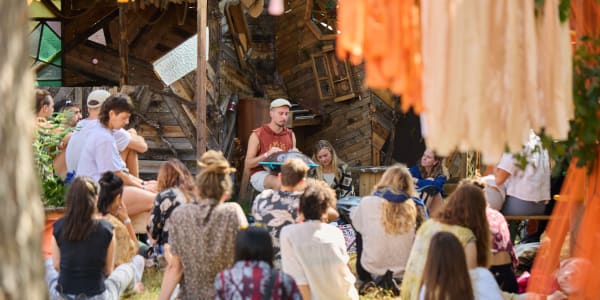
Willkommen in der Welt der Spirituellen Festivals – Orte, an denen sich Gemeinschaft, Heilung und Lebensfreude begegnen.