












Retreat experience for solo travelers – A journey back to yourself
Discover why a retreat experience is more than just a vacation for solo travelers—it is a conscious journey toward inner peace, healing and self-discovery.
Read more

A retreat is a deliberate break from everyday life: a few days in a quiet place, usually in a small group, with a set program of yoga, meditation, silence or time in nature. The word means "withdrawal" – you step back from your routine to rest and get your bearings again. You can browse current offers among our retreats in Germany.
In this article you'll learn where the word comes from, how a retreat differs from a vacation or a workshop, which types exist, what a typical day looks like and what a retreat costs.
In everyday English, retreat means both the act of withdrawing and a quiet, secluded place. When people talk about "going on a retreat" today, they almost always mean an organized break with a program: you travel to a peaceful place, a facilitator sets the frame, and the only thing you need to take care of is yourself.
In German-speaking countries the English word has become part of the language too. The Duden dictionary describes a retreat as a rest or short time-out, taken alone or in a group.
Retreat comes via Old French from the Latin retrahere, "to draw back". In English it has been in use since around 1300, first as a step backward, later also as a military withdrawal. Since the 15th century it has described a place of seclusion, and since the mid-18th century a period of withdrawal for religious reflection.
The idea is much older than the word: monasteries, spiritual exercises, the rainy-season retreat of Buddhist monks or the Indian ashram are all ways of leaving daily life behind for a while. Today most retreats are not tied to a religion. They combine old practices such as meditation or fasting with a simple wish to breathe out.
The lines are blurry, but each has a clear focus:
Vacation: rest and experiences on your own schedule. You decide what to do – often with lots of sightseeing and activities.
Workshop or seminar: learning comes first. You're taught a skill or method, often in a classroom, sometimes with a certificate.
Retreat: the experience comes first. A daily rhythm, a small group and a facilitator create the space in which you slow down, practice and reflect.
Many offers mix these elements: a yoga retreat can feel like a vacation, a meditation retreat is often a course as well. What matters is that withdrawal and your own practice are at the center – not sightseeing and not exams.
What you take home depends on you and on the format. Participants often mention:
Distance: a few days without appointments, chores or being reachable clears your head.
Rest and better sleep: a fixed rhythm, movement and early evenings do many people good.
Clarity: with some distance, questions about work, relationships or your own health become easier to sort out.
New routines: you learn practices you can continue at home, such as a short morning meditation.
Connection: among people looking for something similar, conversations are often surprisingly open.
A retreat isn't a miracle cure, though. It can give you a push – what stays with you is decided in everyday life afterwards.
These retreats on RetreatPartner are popular right now:
Retreats differ mainly in how you spend your time. The most common types:
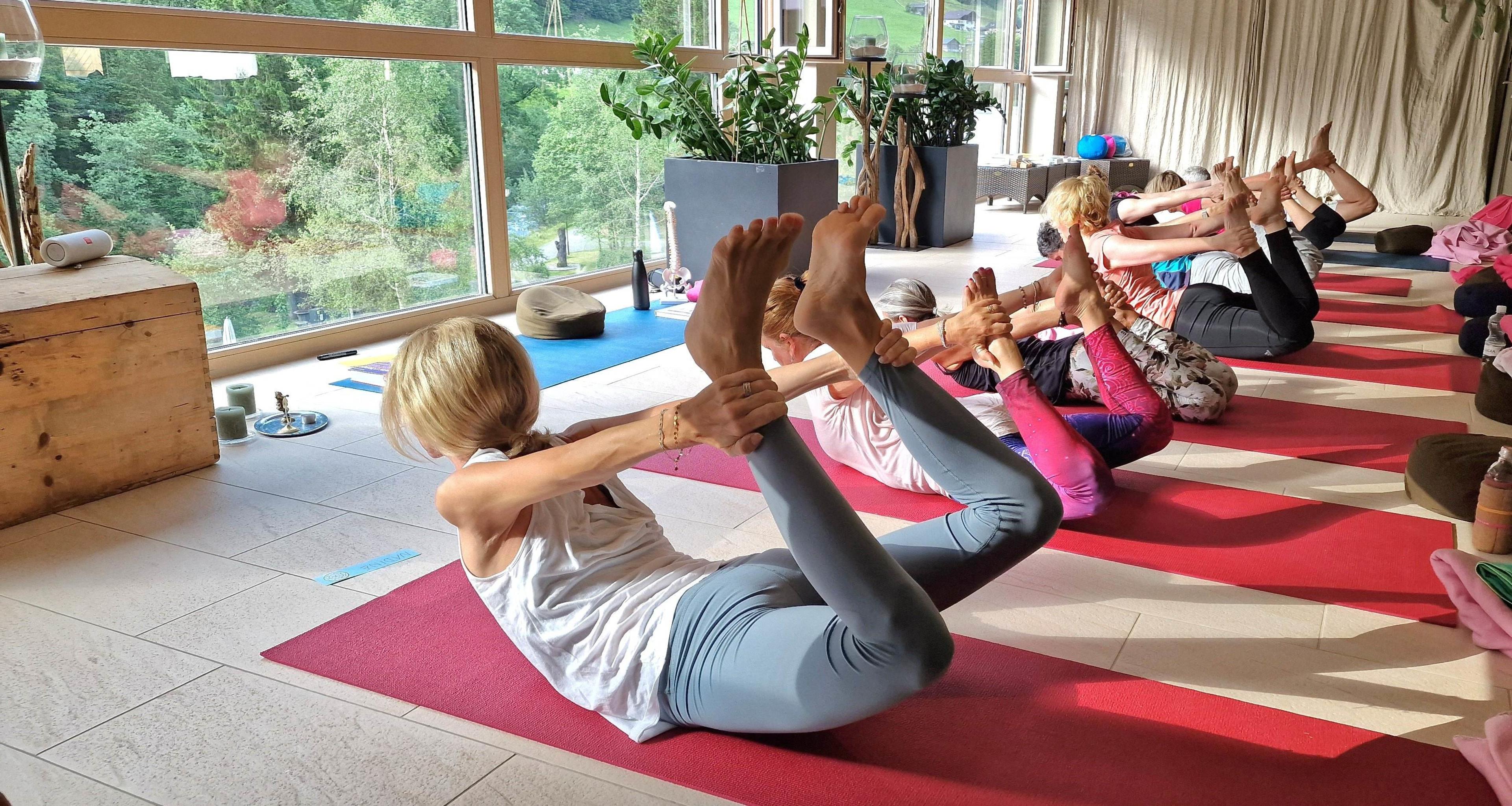
The best-known and most accessible type. There's usually a yoga session in the morning and evening, with free time, walks or meditation in between. Many are open to beginners. Browse our yoga retreats.
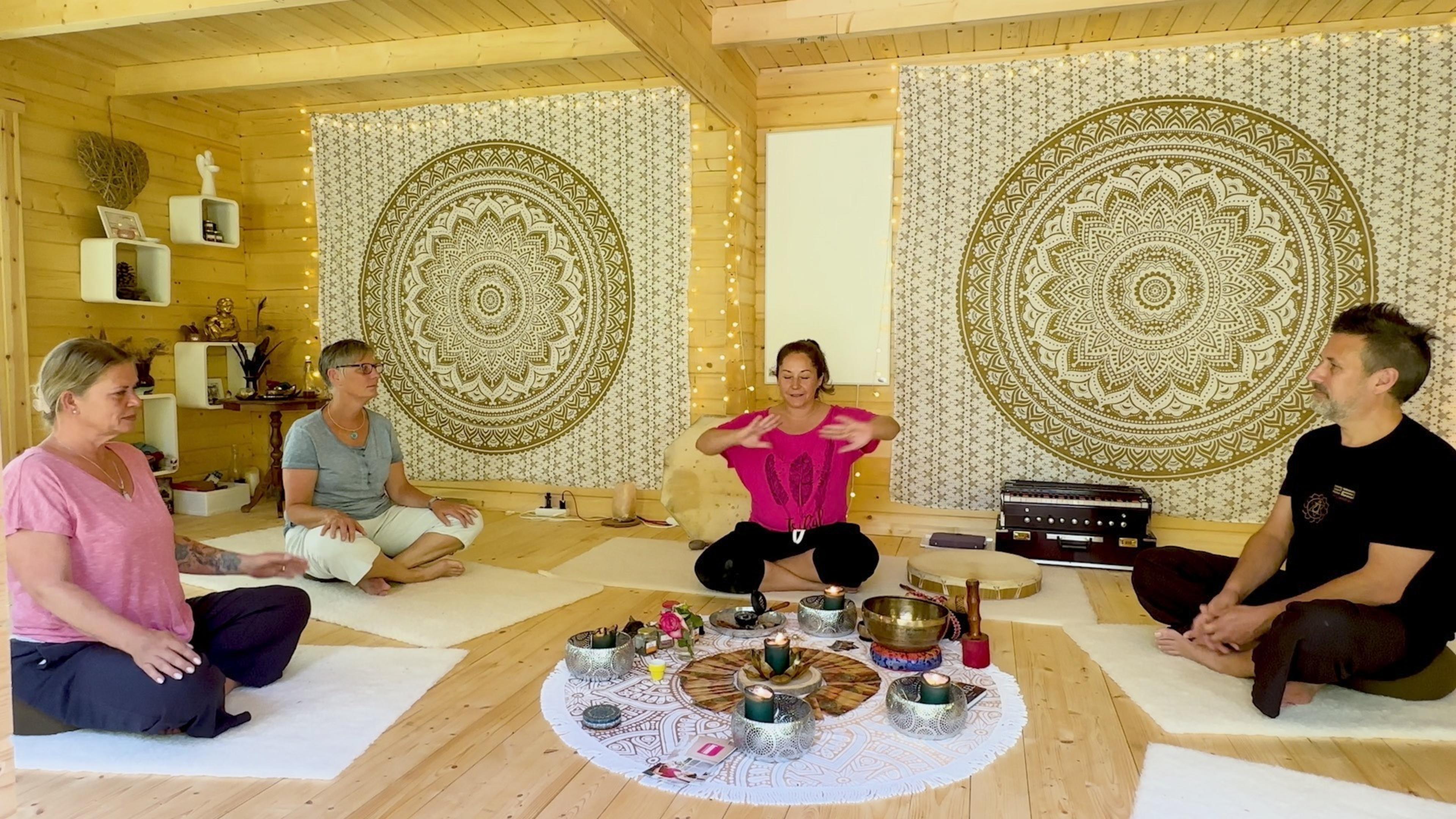
Meditation is the focus here, often in several sessions a day, plus mindfulness exercises and talks. Styles range from Zen and Vipassana to guided meditation. Find offers among our meditation retreats.
You spend the days entirely or mostly in silence. It sounds strict, but many people experience it as a great relief, because nobody expects small talk. Learn more about silent retreats.
You go without solid food, fully or partly, for a few days – for example Buchinger fasting or alkaline fasting – with guidance throughout. Movement, rest and nature are usually part of it. Fasting isn't for everyone, so talk to your doctor first. See our fasting retreats.
These are about questions of meaning, rituals and inner experience – from energy work and shamanic rituals to seasonal celebrations. Get an overview of our spiritual retreats.
Women's retreats offer a protected space among women, often with circle work, bodywork and rituals. Many participants value the openness in the group. Browse our women's retreats.
Time away together: couples retreats combine shared time with exercises on communication, closeness and the relationship. They aren't couples therapy, but they can spark important conversations. See our couples retreats.
Many monasteries open their guest houses to people looking for a time of quiet – no religious background required. You follow the rhythm of the community, can join prayer times and have space to withdraw. Find monastery retreats.
There are many more types, such as nature and hiking retreats or retreats focused on breathwork, Ayurveda or energy work.

Every retreat is different, but many follow a similar rhythm. A typical day at a yoga and meditation retreat might look like this:
7:00 am: meditation or a quiet morning practice
8:00 am: yoga
9:30 am: breakfast together
11:00 am: workshop, sharing circle or walk
1:00 pm: lunch, then free time to read, nap or go for a walk
4:30 pm: second session, such as yin yoga, breathwork or mindfulness
7:00 pm: dinner
8:30 pm: evening meditation, sound or a sharing circle
The first day usually starts with an arrival and introduction round, the last one ends with a closing circle. Meals are often vegetarian and eaten together. Almost everywhere, every session is an invitation, not an obligation. If you need a break, you take it.
Most retreats last between two and seven days. A weekend from Friday to Sunday is enough to find out whether the format suits you – see our weekend retreats. For deeper experiences, such as silence or fasting, five to ten days are common.
On RetreatPartner, the median retreat lasts four days in Germany and eight days abroad (as of October 2026, RetreatPartner data).

Based on our analysis of 132 active retreats on RetreatPartner (as of October 2026), the median retreat in Germany costs €510. The middle half of offers costs between €360 and €995, for a typical length of four days – about €140 per day.
Short retreats (1–3 days): median €425
Retreats in Germany (median 4 days): €510, about €140 per day
Retreats abroad (median 8 days): €1,800, about €220 per day
Yoga retreats: median €575
Prices are the main price listed by the host. Whether accommodation and meals are included varies by offer, so check the description. Travel and a single-room supplement usually come on top. In Switzerland, prices are often listed in CHF.
Both have their appeal. A retreat in Germany, Austria or Switzerland is quick to reach, often by train, and more affordable. It works well for a long weekend or when you don't want a long journey home afterwards.
A retreat abroad offers more distance and often sun and sea – in Mallorca, Portugal or the Canary Islands, for example. It's longer and more expensive, and travel takes time. If you only have a few days, the journey can easily outweigh the rest. Browse our retreats in Spain or retreats in Austria.
A retreat suits you if you're looking for distance from everyday life, enjoy trying something new and can settle into a set rhythm. You don't need any experience: many retreats are explicitly designed for beginners. Traveling alone is completely normal too – many participants come on their own.
A retreat is less suitable if you're mainly after partying, sightseeing or a lot of independence. And it's no substitute for treatment: if you're in an acute mental health crisis or have a serious illness, talk to your doctor or therapist first. Intense formats such as fasting, breathwork or long periods of silence can be physically and emotionally demanding.
These questions help you choose:
What do you want? Rest, deepen a practice, experience silence, learn something new or find community?
How much time do you have? A weekend is enough to start; for deeper processes, five days or more make sense.
Near or far? A retreat close to home saves travel time and money; abroad often adds sunshine and distance.
How big should the group be? Small groups feel more personal, larger ones offer more anonymity.
Who leads the retreat? Look at the facilitator's profile, training and experience, and read reviews from other participants.
What's included in the price? Accommodation, meals, program, single room, cancellation terms.
On RetreatPartner you can filter retreats by topic, location, date and length, and contact the facilitator directly with questions.

A retreat is a deliberate break of a few days in a quiet place, usually with a set program of yoga, meditation, silence or nature. The word itself means withdrawal.
It depends on the type. Typical elements are a daily rhythm with yoga, meditation or other practices, shared meals, time in nature and free time for yourself.
Usually between two and seven days. On RetreatPartner, the median retreat lasts four days in Germany and eight days abroad (as of October 2026).
According to RetreatPartner data, the median retreat costs €510 for four days in Germany and €1,800 for eight days abroad (as of October 2026). Whether accommodation and meals are included varies.
On vacation you plan your own time, often with lots of activities. A retreat has a set frame with a facilitator, a group and a daily rhythm, and is mainly about withdrawal and your own practice.
Yes, many participants come on their own. The group forms on site, and it's completely normal to take time for yourself in between.
In most cases, no. Many retreats are explicitly open to beginners. For intense formats such as longer silent or fasting retreats, it's worth talking to the facilitator beforehand.
Not necessarily. The idea comes partly from religious traditions, but most retreats today are not tied to any religion. Monastery stays are the exception, though they are usually open to guests of all backgrounds.
Discover why a retreat experience is more than just a vacation for solo travelers—it is a conscious journey toward inner peace, healing and self-discovery.

Discover how small, conscious breaks and mindful enjoyment can slow down your everyday life and help you keep the energy of your retreat alive.
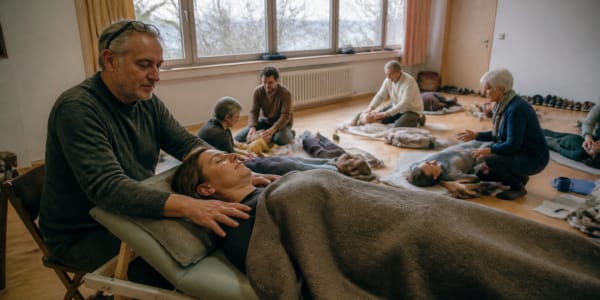
Reiki, Chakren, Qigong: Was Energiearbeit ist, was sie kann und was nicht, wie eine Sitzung abläuft und wie du sie lernst.